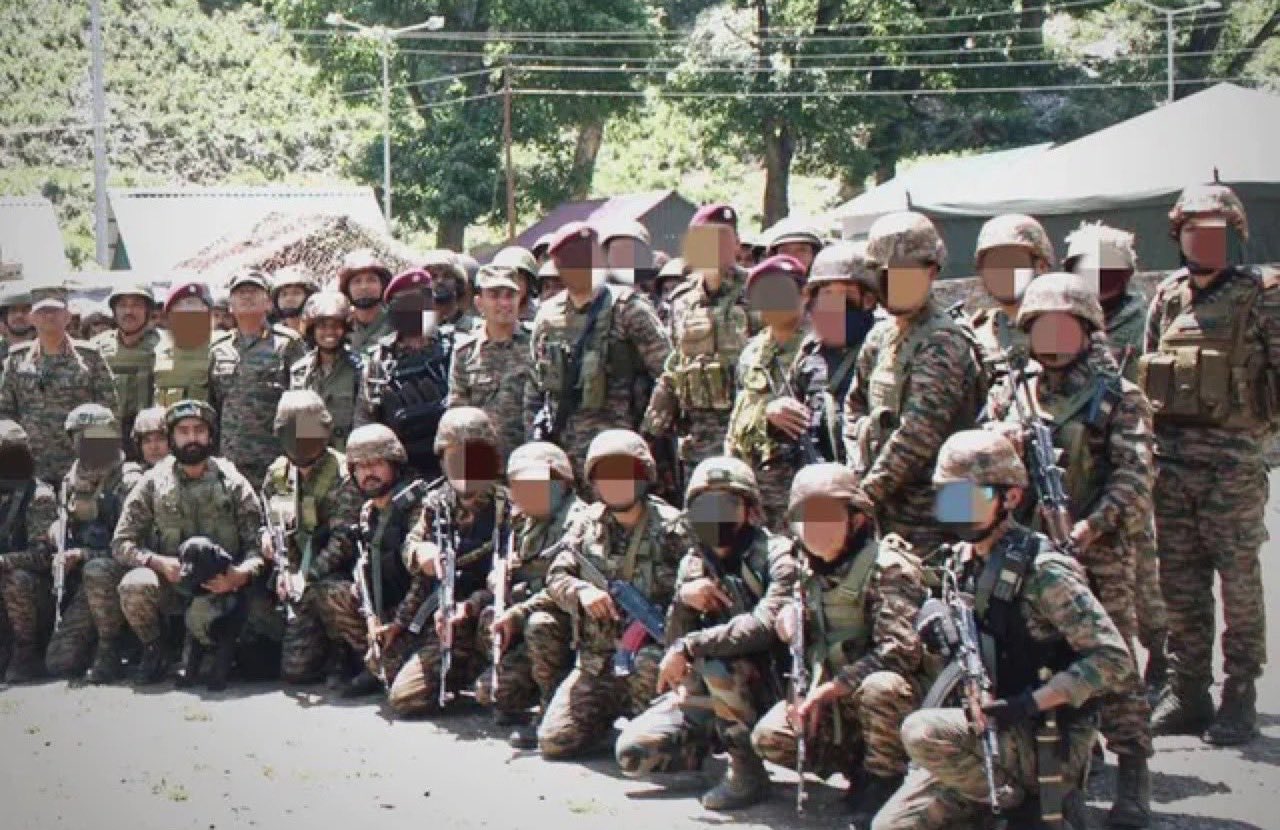
Former military personnel
Individuals with service in regular armed forces, where their service has concluded, their participation is lawful, and any continuing obligations to a former employer are respected in full.
+91 97699 99960 im@digantsharma.com
Confidential EnquirySecurity is delivered by individuals. Who they are, what they can actually do, and whether their engagement is lawful, is the entire question.
02 The Premise Background is a starting point
People who have worked in demanding, structured professions frequently bring qualities that are difficult to develop quickly: composure, preparation as habit, accurate communication, and the discipline to work inside a defined role.
We look for those qualities, and a relevant background is often where they are found. But a background describes what somebody did in the past, under a particular authority, in a particular legal context. It does not establish what they may lawfully do now, for a private client, in a different country.
This distinction is the centre of how we work. A specialist's history informs our assessment of their judgement; it never substitutes for verification, licensing, work authorisation, contract, insurance and accountability. Where those cannot be established, the individual is not engaged — however impressive the history.
Every individual must be appropriately qualified, verified, legally permitted and professionally suitable.
What we do not publish
We do not publish the names, photographs, service histories, unit affiliations, ranks, decorations, locations or contact details of specialists. This is not reticence for its own sake: publishing such material would compromise the privacy and security of the individuals concerned and, in some cases, the clients they have worked for.
We also do not invent them. Where a website presents named operatives with detailed service records and decorations, a client has no practical way to verify any of it — and the presentation itself indicates a provider willing to trade other people's privacy for marketing.
Clients considering an engagement receive the information they need about the specific individuals proposed, through appropriate confidential channels and subject to consent and contract.
03 Professional Backgrounds Eight categories considered
The categories below describe backgrounds we consider. They are not claims about any particular individual, and inclusion of a category does not mean that personnel from it are currently engaged or available for a given requirement.
In every case the relevant question is the same: does this person's verified experience, current qualification and lawful status make them suitable for this assignment, in this jurisdiction, now?
 Structured assessment
Individuals with service in regular armed forces, where their service has concluded, their participation is lawful, and any continuing obligations to a former employer are respected in full.
Individuals with selective-unit backgrounds, considered for the judgement and preparation such service can develop — never for any implied authority, and never with disclosure of restricted detail.
Career practitioners from the private security sector, including those with experience of regulated protective work, guarding management, and security operations in commercial settings.
Individuals with policing or regulatory-enforcement backgrounds, whose familiarity with procedure, evidence, reporting and lawful conduct transfers usefully to private protective work.
Practitioners whose principal career is close protection: advance work, venue and route assessment, movement planning and the discretion that protective work around principals demands.
Assessment and planning specialists — people whose work product is analysis and design rather than presence, and who can explain a recommendation to a board as readily as to a security team.
Qualified trainers in personal safety, awareness, de-escalation and lawful defensive skills, assessed on instructional competence and safeguarding as much as on subject knowledge.
Analysts and planners with backgrounds in organisational risk, crisis preparedness, travel risk and business continuity, who work in structured frameworks rather than impressions.
04 Verification Six requirements
These are preconditions rather than preferences. Each must be satisfied for the specific assignment concerned, and each is revisited when the assignment, the jurisdiction or the individual's circumstances change.
01
Confirmed identity and confirmed authorisation to perform paid work in the jurisdiction of the assignment. An individual who cannot lawfully work in a territory is not engaged there, whatever their competence, and immigration status is treated as a hard constraint rather than an administrative detail.
02
Proportionate background checking appropriate to the role and to what applicable law permits, including employment history, referenced experience and, where lawful and relevant, criminal-record checking. Verification is conducted with the individual's knowledge and consent.
03
Current, valid qualifications relevant to the work, and any licence the jurisdiction requires for the activity concerned. Where a licence is required and cannot be obtained, the activity is not performed — not performed differently, or informally, or under another description.
04
Assessment of judgement, temperament, communication and conduct, not only technical capability. Protective work places people close to clients in private circumstances; discretion, restraint and the ability to de-escalate matter more than physical attributes in almost every engagement.
05
Written confidentiality undertakings covering client information, and explicit confirmation that the individual will not disclose classified, restricted or confidential material belonging to a previous employer. Any candidate who volunteers such material is not engaged.
06
A written engagement defining scope, responsibilities, reporting lines, permitted conduct and termination, together with insurance appropriate to the activity and territory. Undocumented engagement is not a shortcut; it is the removal of the client's principal protection.
Scope of authority
Specialists act as private individuals under contract. They hold no police powers, no powers of arrest beyond those available to any member of the public in the relevant jurisdiction, no investigative authority and no governmental mandate. Previous service — of any kind, in any country — does not alter this.
Continuing obligation
Verification is not a one-off event. Licences expire, authorisations lapse and circumstances change. Status is re-confirmed for each assignment rather than assumed to persist.
Two directions from here
Clients should begin with a confidential enquiry. Professionals interested in working with us should review the careers page before making contact.